Overview
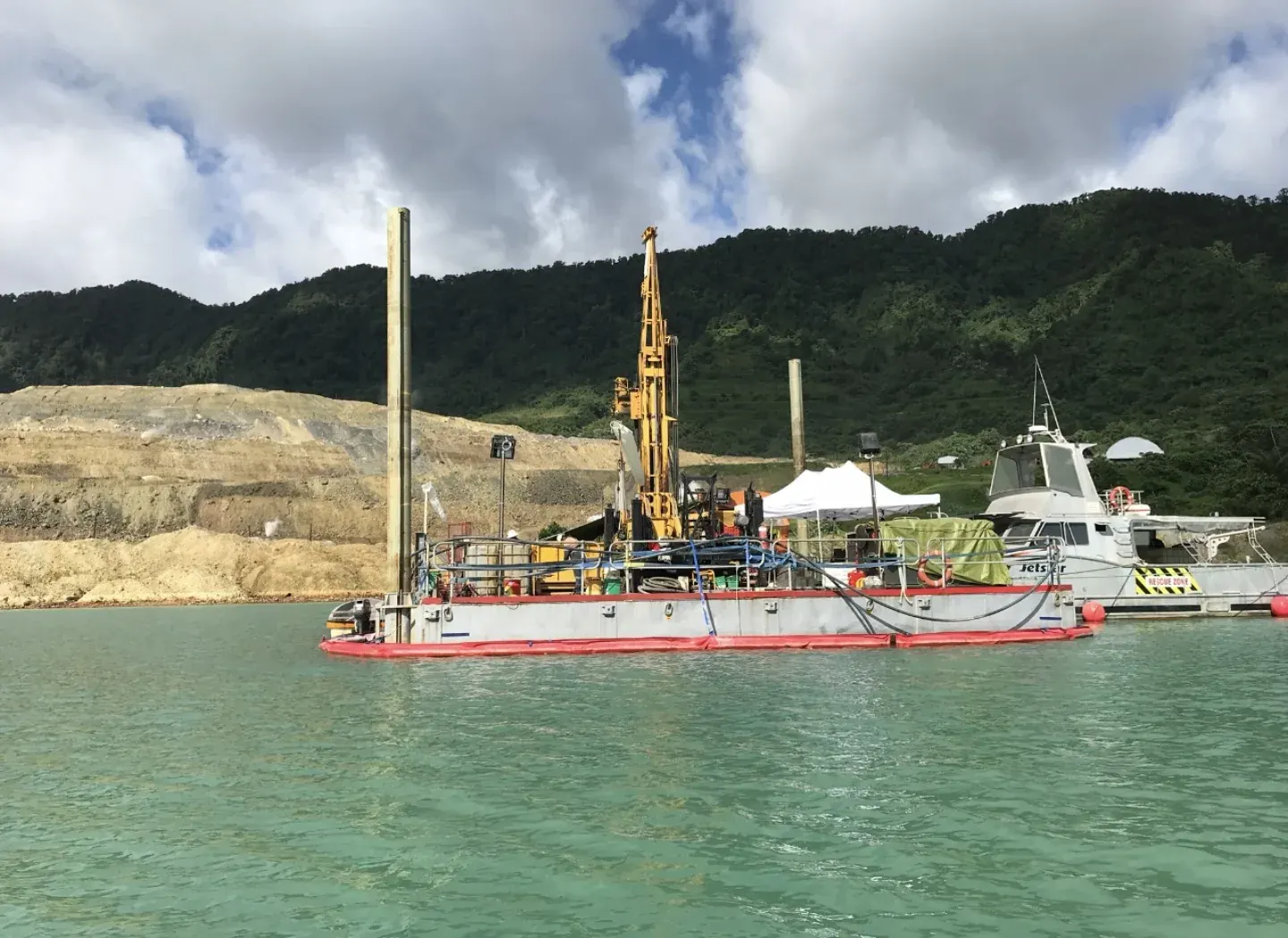
Marine investigations characterise seabed sediments and underlying ground for engineering design. The drilling and sampling plan depends on water depth, ground conditions, platform stability and the required quality of the data.
Drilling methods
Methods below describe typical industry practice. Confirm project availability, delivery responsibilities and technical requirements during quotation.
Cased and rotary wash boreholes
Temporary casing can support the borehole through water and unstable ground. Rotary wash or cased rotary methods can advance the hole for sampling and testing.
Seabed sampling and testing
Marine soil sampling, SPT and rock coring may be specified to characterise sediments and bedrock. Sample handling and borehole logs need a clear reference for position and elevation.
Working platforms
A jack-up, spud barge, modular platform or vessel-mounted arrangement may suit different water depths and site constraints. Platform selection depends on access, station keeping and the environmental limits of the work.